This did not start with a parking-lot business plan.
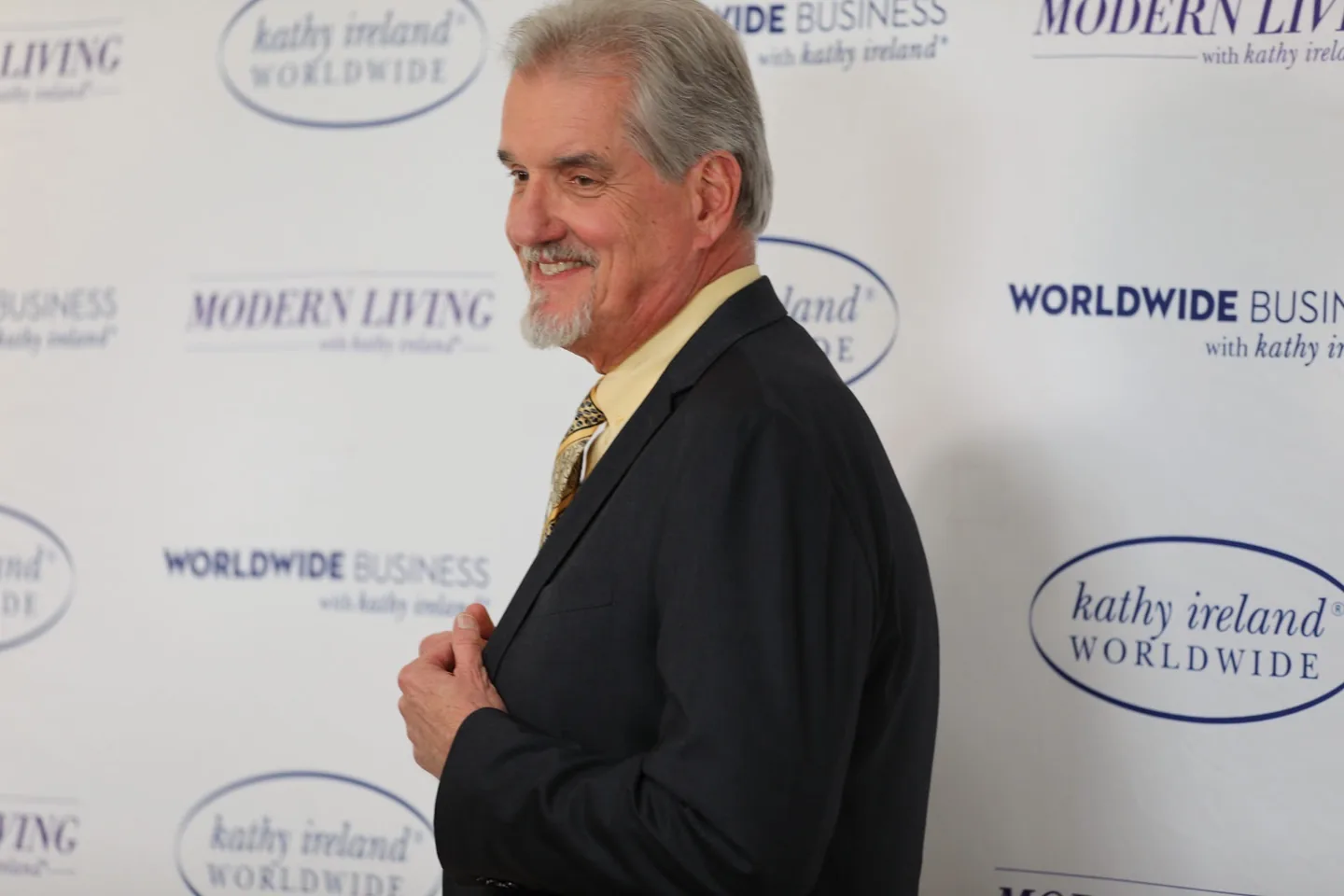
Frank Sonzala's path to ALL SET runs through decades of transportation work.
Long before truck parking became the focus, his career put him around commercial-vehicle equipment, trucking fleets, tire systems, trailers and chassis, intermodal operations, transportation manufacturers, industry associations and the people responsible for making freight move.
That matters because truck parking did not appear to him as an abstract market opportunity.
It appeared as another operating problem inside an industry he already knew.
BEFORE ALL SET
Frank's career was built around transportation equipment and solving practical problems.
Before Pressure Systems International and CIMC Intermodal Equipment, Frank held executive roles with International Transquip and Reef Industries.
Heavy Duty Trucking's profile of Frank's CIMC appointment later documented those roles as part of the transportation background that preceded his leadership at CIMC.
The important part of that history is not the list of job titles.
It is the pattern.
Frank spent his career close to products and systems that had to work in the real world of commercial transportation.
22 YEARS AT PSI
One company became more than two decades of his career.
Frank spent 22 years with Pressure Systems International.
Trucks, Parts, Service's coverage of Frank's PSI career reported that he was an early employee and served as executive vice president.
PSI developed commercial-vehicle automatic tire inflation technology, and Frank was involved as the product expanded in the United States and internationally.
In a later Heavy Duty Trucking interview with Frank, he described startups as a recurring part of his career and discussed helping take PSI's technology into markets including Europe and China.
The takeaway is not a technical history of tire inflation.
Frank spent years helping move a practical commercial-vehicle solution from idea to broad industry use.
Transportation problems rarely disappear because someone writes a better presentation.
The commercial-vehicle industry is full of good ideas.
The difficult part is making them work around fleets, equipment, maintenance, operations, customers, economics, infrastructure and the people who actually use them.
Decades around transportation taught Frank to look for the difference between:
A problem everyone agrees exists
and
A solution people can actually use.
That distinction would become important later.
INTERMODAL TRANSPORTATION
Then the view widened from components to freight infrastructure.
In 2016, Frank was named president and CEO of CIMC Intermodal Equipment.
CIMC's North American business put him directly around chassis, containers and the equipment connecting ports, rail and trucking.
At the time of Frank's CIMC appointment, Heavy Duty Trucking described the company as a major supplier of domestic chassis and container parts.
Frank's industry involvement also included historical board positions with the Intermodal Association of North America and the Truckload Carriers Association.
The view was getting broader.
Not only:
How does the component work?
But:
How does freight move through the system around it?
THE PROBLEM THAT KEPT COMING BACK
Truck parking is remarkably basic for a problem this persistent.
A professional driver eventually has to stop.
That sounds obvious.
The infrastructure surrounding that moment is not.
Across the country, drivers still deal with parking locations that fill, limited alternatives, operating windows that do not wait for a space to open, overnight demand concentrated into the same periods and stopping environments that vary dramatically in usefulness.
Federal and industry research has documented the shortage for years.
Frank saw the same problem from another angle:
If everyone in trucking knows drivers need places to stop, why is finding one still part of the driver's daily problem?
Frank was talking publicly about truck parking before this version of ALL SET existed.
In July 2023, Transport Topics covered Frank's work to develop private-sector responses to the national truck-parking shortage.
In March 2024, Land Line Media followed his continued work on the problem.
These articles establish something important:
Truck parking is not a new subject Frank adopted for the current website.
He has been publicly working through the problem for years.
Those pieces describe historical plans. They are not a source of current ALL SET project specifications.
The details evolved. The conviction did not.
Business plans change.
Sites change. Concepts change. Timelines change.
A project gets refined as the people building it learn more.
The important thread through Frank's earlier truck-parking work was not a specific parcel, number of spaces or old facility model.
It was the belief that the parking shortage is real, private development has a role to play and professional drivers deserve a better answer.
Today's ALL SET is being built from that conviction with a more focused driver-first philosophy.
THE DRIVER QUESTION
Eventually the conversation becomes less about parking counts and more about the people using them.
Frank discussed the truck-parking problem in a radio conversation with Dave Nemo.
The full historical audio is not being hosted on the ALL SET website. Instead, ALL SET maintains an edited text-based treatment so the ideas remain easy to read, search and reference.
One sentiment from Frank captures the motivation particularly well:
These truck drivers deserve it.
That sentence gets underneath the infrastructure argument.
The shortage can be measured in spaces.
For Frank, the reason to work on it is the person inside the truck.
A BETTER QUESTION
Finding a space is only the first problem.
The early truck-parking conversation naturally focused on capacity.
How many spaces are missing?
Where can more parking be built?
Those questions still matter.
But ALL SET's thinking evolved toward another question:
What happens to the driver after the truck is parked?
The driver may still need to rest, eat, clean up, move, call home, have privacy and prepare for tomorrow.
That broader view became The Driver Reset.
The freight system asks a lot from professional drivers.
Drivers spend large portions of their working lives away from home.
They manage the truck, the freight, traffic, appointments, the clock, the road and the responsibility that comes with operating commercial equipment.
Then the day ends somewhere that is usually not home.
ALL SET's point of view is simple:
The infrastructure surrounding that moment deserves more thought.
Not because drivers need pity.
Because the freight economy depends on them doing the job tomorrow too.
And “the driver” cannot quietly mean only one kind of driver.
A driver-first truck park has to consider the people actually entering the industry today.
That includes women professional drivers.
Parking availability, restroom access, privacy, visibility and the broader overnight environment have all appeared in research examining the experiences of women in trucking.
ALL SET wants those questions included while projects are still being planned.
Not bolted on afterward.
The driver's stop also sits inside a larger operation.
Frank's transportation background makes another part of the problem difficult to ignore:
A truck does not stop existing as part of the freight network simply because the parking brake is set.
The tractor, trailer, load, delivery, customer and next operating period remain part of the picture.
That is why ALL SET also looks at parking from fleet planning, recurring-lane demand, freight and infrastructure perspectives.
FROM IDEA TO ALL SET
The name is new. The problem is not.
The current ALL SET Truck Park is the next iteration of Frank's work on truck parking.
Today's ALL SET model is designed around approximately 15-acre sites, capacity for roughly 450 tractors and trailers, 24/7/365 operation, full amenities, safety training and useful safety and trucking equipment available for purchase.
The focus is clearer:
Driver-first physical truck-parking infrastructure.
The company's first truck park is Corpus Christi, Texas.
The goal right now is not to fill a website with promises about what every future park will contain.
It is to understand parking demand, develop the first truck park responsibly, listen to drivers and fleets, identify serious partners and build from facts as they become confirmed.
Why start with Corpus Christi?
Corpus Christi sits inside a significant South Texas freight network tied to port activity, energy, industry, major highways, inland commerce and international trade connections.
Public TxDOT research has also examined truck parking within the Corpus Christi district.
That makes the region worth investigating.
But public freight data cannot answer the project-level question by itself:
Would drivers and fleets actually use more driver-first parking here?
That is why ALL SET is collecting direct demand now.
The reason for doing it.
The route to ALL SET has changed.
The company structure has evolved.
The first truck park differs from some of the early ideas.
The driver-first concept has become clearer.
But the basic conviction remains:
Truck parking is a real infrastructure problem.
Professional drivers experience it personally.
Fleets experience it operationally.
Freight depends on the people dealing with it.
And somebody has to build more physical places for trucks to stop.
THE PAPER TRAIL
You do not have to take the company biography at its word.
Frank's transportation career and truck-parking work have been covered by independent industry publications over the years.
HEAVY DUTY TRUCKING · 2016
Frank Sonzala named president and CEO of CIMC Intermodal Equipment
TRUCKS, PARTS, SERVICE · 2016
Coverage of Frank's CIMC appointment and PSI career
HEAVY DUTY TRUCKING · 2019
Q&A with Frank about PSI, startups and intermodal chassis
TRANSPORT TOPICS · 2023
Coverage of Frank's truck-parking work
LAND LINE MEDIA · 2024
Coverage of Frank's continued truck-parking work
The road to ALL SET
COMMERCIAL-VEHICLE EXPERIENCE
Executive roles in transportation-related businesses.
22 YEARS AT PSI
Helping grow a commercial-vehicle technology business.
INTERMODAL LEADERSHIP
President and CEO of CIMC Intermodal Equipment.
A PERSISTENT PARKING PROBLEM
Years of public work around America's truck-parking shortage.
A DRIVER-FIRST QUESTION
What should happen after the truck is parked?
ALL SET
Driver-first truck parking, beginning with Corpus Christi.
THE STORY IS STILL BEING WRITTEN
The next useful information has to come from the road.
Frank's experience explains why ALL SET is working on truck parking.
Drivers and fleets will help determine where the need is real.
If the same parking problem keeps appearing on your routes, tell us where.
first truck park: Corpus Christi, Texas.